
Why Every Fleet Business Needs Real-Time Vehicle Tracking
For a fleet business, knowing where a vehicle was dispatched is not enough. Fleet managers need visibility into where vehicles are moving, when they crossed key points, and whether a journey is progressing as expected.
Without reliable vehicle movement data, businesses often depend on driver calls, manual updates, and assumptions. That can lead to delayed deliveries, poor fleet visibility, unnecessary follow-ups, and difficulty verifying what happened during a journey.
This is why vehicle tracking for fleets has become an important part of modern logistics management.
What Is Real-Time Vehicle Tracking?
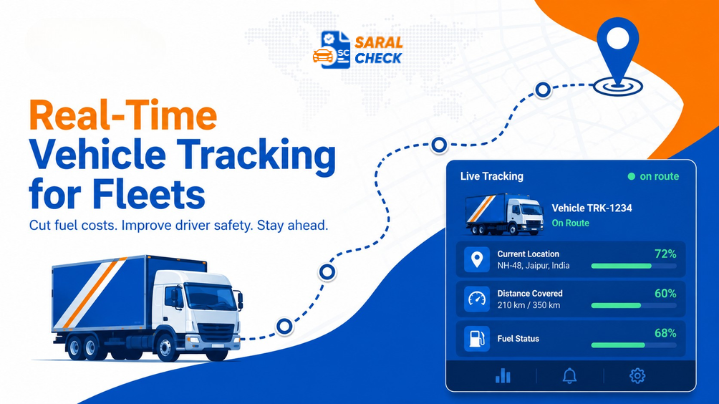
Real-time vehicle tracking refers to technology that helps businesses monitor the movement and location of vehicles during a journey.
Traditional fleet management depends heavily on phone calls and manual reporting. A digital tracking system provides a more structured way to understand vehicle movement and maintain journey records.
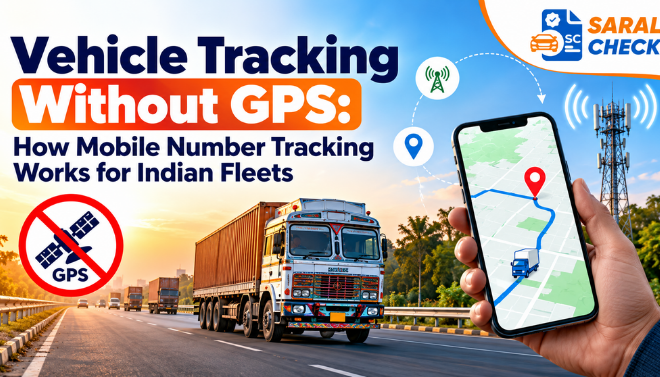
However, not every vehicle tracking solution works through GPS.
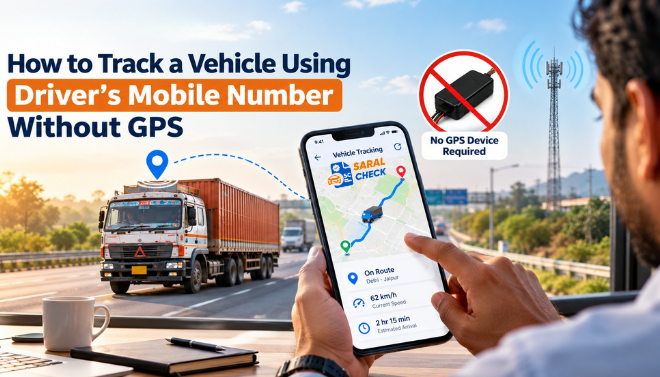
For example, Saral Check’s vehicle tracking service uses toll-plaza movement data. When a vehicle crosses a toll plaza, a digital movement record is generated. Saral Check uses these records to show the vehicle’s latest confirmed movement and relevant journey information.
This makes it useful for businesses that need vehicle movement visibility without installing a GPS tracking device.
Why Vehicle Tracking Matters for Fleet Businesses
Managing multiple vehicles without reliable movement information can quickly become difficult.
Here are some of the biggest areas where vehicle tracking can improve fleet operations.
1. Know the Latest Confirmed Vehicle Movement
Instead of repeatedly calling drivers for updates, fleet managers can check available movement information digitally.
Toll crossings provide useful confirmation that a vehicle has passed a particular point, helping businesses understand the vehicle’s recent highway movement.
This is especially useful when a vehicle is travelling between cities or across major highway routes.
2. Reduce Unnecessary Driver Calls
“Where is the vehicle?”
For many transport businesses, this question is asked repeatedly throughout the day.
When movement information is available digitally, managers can reduce unnecessary calls and focus their teams on more important operational tasks.
It also creates a more consistent way of checking journey progress instead of depending entirely on verbal updates.
3. Improve Delivery Visibility
A delayed vehicle can affect an entire logistics chain.
When managers can see the latest confirmed toll crossing, they have a better understanding of whether a vehicle has progressed along its expected route.
This can help teams communicate more confidently with customers and plan the next operational step.
4. Maintain a Digital Movement Record
Manual fleet records can be difficult to maintain and verify.
Digital vehicle tracking can provide useful journey information such as:
- Toll plazas crossed
- Date and time of toll crossings
- Latest confirmed toll crossing
- Direction of vehicle movement
- Highway movement information
- Recent movement history
For fleet operators, having this information available digitally can make vehicle movement verification much easier.
5. Improve Fleet Visibility Without GPS Installation
One of the major challenges for businesses is that not every commercial vehicle has a GPS device installed.
Vehicles may be hired temporarily, sourced from the market, or operated without permanent tracking hardware.
A toll-based vehicle tracking solution can provide another way to understand recent vehicle movement without requiring GPS installation.
Traditional Fleet Management vs Digital Vehicle Tracking
| What You Need to Know | Traditional Method | Digital Vehicle Tracking |
| Latest vehicle movement | Driver calls | Digital movement data |
| Toll crossings | Manual information | Recorded digitally |
| Journey history | Paper/messages/calls | Structured movement records |
| Driver follow-ups | Frequent | Reduced where data is available |
| Highway movement | Difficult to verify | Easier to check |
| Vehicle visibility | Dependent on updates | Available through a digital platform |
The goal is not to replace every communication with technology. It is to give fleet managers better information before they make the next call or operational decision.
Who Can Benefit From Fleet Vehicle Tracking?
Vehicle movement tracking can be useful for a wide range of businesses, including:
- Fleet owners managing multiple commercial vehicles
- Transporters moving goods between cities
- Logistics companies coordinating vehicle journeys
- Businesses hiring commercial vehicles
- Distributors and manufacturers managing transportation
- Operations teams that need better visibility into vehicle movement
The larger the fleet, the harder it becomes to depend entirely on manual updates.
Vehicle Tracking vs Vehicle Verification
Vehicle tracking and vehicle verification solve different problems, and fleet businesses may need both.
Vehicle tracking helps answer:
Where has the vehicle moved recently?
Vehicle verification helps answer:
Is this vehicle legitimate and properly documented?
Before assigning a vehicle to a journey, businesses can use vehicle verification to check important vehicle information. During or after a journey, vehicle tracking can help provide movement visibility.
For businesses managing commercial vehicles, combining verification + tracking creates a stronger operational process.
How Saral Check Vehicle Tracking Works
Saral Check’s vehicle tracking service uses toll-plaza data rather than GPS hardware.
When a vehicle crosses a toll plaza, a digital record of that movement is generated. Saral Check uses available toll information to help businesses understand the vehicle’s recent movement.
The service can help you:
- Check toll plazas crossed in the last 72 hours
- View the date and time of toll crossings
- Identify the most recent toll crossing
- Understand the direction of movement
- Check recent highway movement
This makes it particularly useful when you need to verify whether a commercial vehicle has actually progressed along a journey.
What About Vehicles Without GPS?
A common misconception is that vehicle tracking always requires a GPS device.
It doesn’t.
GPS-based tracking and toll-based vehicle movement tracking are different approaches.
GPS tracking can provide continuous location updates when the required hardware or application is active. Toll-based tracking, on the other hand, uses confirmed toll-crossing events to provide recent movement information.
For businesses that need recent highway movement without installing a GPS device, toll-based tracking can be a practical option.
How to Use Vehicle Tracking More Effectively
Vehicle tracking becomes more valuable when it is part of a larger fleet-management process.
A simple workflow can be:
Step 1: Verify the vehicle
Check vehicle information before assigning it to a journey.
Step 2: Record the journey details
Maintain the vehicle number, driver information, destination, and dispatch details.
Step 3: Monitor available movement data
Check toll crossings and recent movement during the journey.
Step 4: Follow up when movement doesn’t match expectations
Use the available information to identify when additional driver or transporter confirmation is required.
Step 5: Keep digital records
Use movement information as part of your operational documentation.
This approach reduces dependence on scattered WhatsApp messages, phone calls, and manual notes.
FAQs About Real-Time Vehicle Tracking
Yes. Even a small fleet can benefit from easier access to vehicle movement information. The value comes from reducing manual follow-ups and improving visibility during journeys.
Yes. Even a small fleet can benefit from easier access to vehicle movement information. The value comes from reducing manual follow-ups and improving visibility during journeys.
Saral Check’s vehicle tracking service provides toll-plaza movement information for the last 72 hours, where relevant data is available.
With Saral Check’s toll-based vehicle tracking, you can check recent highway movement without installing a GPS tracking device
Vehicle tracking focuses on vehicle movement, while vehicle verification focuses on vehicle information and documentation. Both can play different roles in fleet management.
No. Toll-based tracking provides movement information when a vehicle crosses relevant toll plazas. It should not be represented as continuous GPS location tracking.
The Bottom Line
Fleet management becomes difficult when important journey information exists only in phone calls and manual updates.
Vehicle tracking brings movement information into a digital workflow, helping fleet owners and logistics teams understand recent vehicle movement, reduce unnecessary follow-ups, and maintain better journey records.
For businesses that do not have GPS installed on every vehicle, toll-based tracking can provide another practical way to verify highway movement.
If you manage commercial vehicles and want a simple way to check recent vehicle movement, explore Saral Check’s Vehicle Tracking service.