



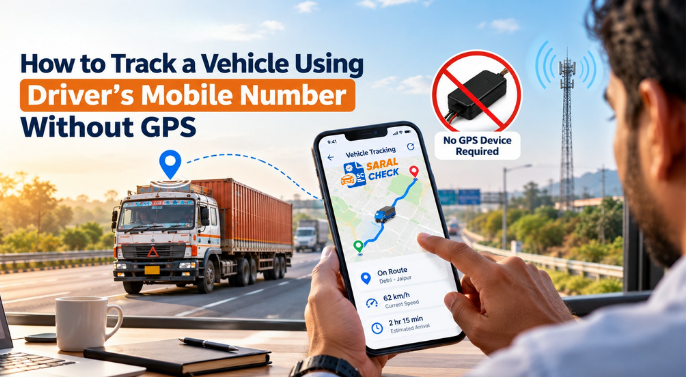
How to Track a Vehicle Using the Driver’s Mobile Number Without GPS
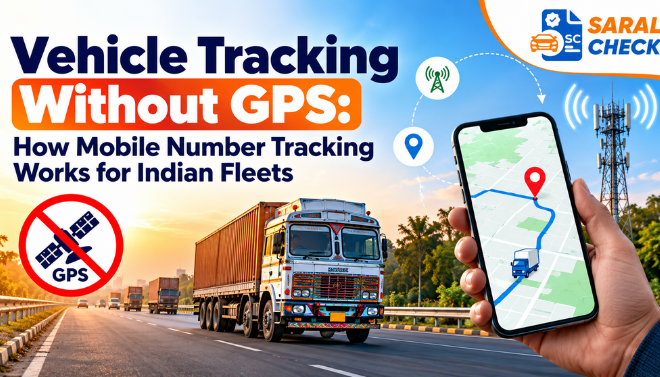
Have you ever hired a truck for an urgent delivery and then spent the next few hours calling the driver for updates? You ask where the truck has reached, whether it has stopped, and when it might arrive. The problem becomes even more difficult when the vehicle does not have a GPS tracking device.
For transporters, fleet owners and logistics businesses, this is a familiar situation. Not every vehicle available in the market comes with installed GPS hardware, particularly when it is hired for a single trip.
The good news is that you can get vehicle movement updates through a mobile-number-based tracking service without installing a dedicated GPS device, provided the service supports the vehicle’s trip and the driver’s phone has the required network connectivity.
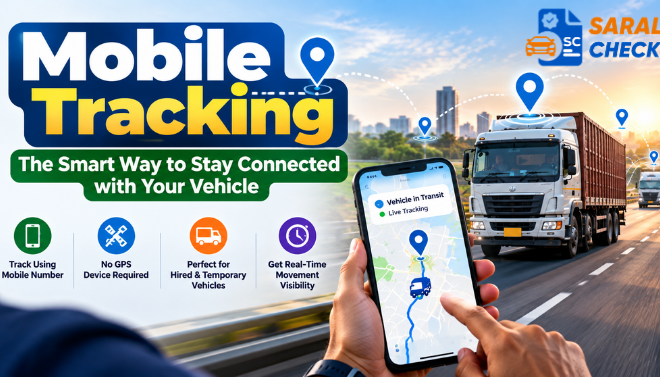
SaralCheck Mobile Tracking offers this option for transport operations that need visibility into vehicle movement without relying on an installed GPS device. However, mobile tracking has limitations, and understanding them is important before choosing a tracking method.
What Is Mobile Number-Based Vehicle Tracking?
Mobile number-based vehicle tracking is a method of obtaining vehicle movement information through a driver’s registered mobile number and the mobile tracking service being used.
Unlike conventional GPS tracking, which generally relies on a dedicated device installed in a vehicle, this approach does not require additional GPS hardware to be fitted to the truck.
For example, imagine that a transporter hires a truck from the local vehicle market to deliver goods from Ghaziabad to Jaipur. The truck does not have a GPS device, and the transporter wants to follow the trip without repeatedly calling the driver.
With SaralCheck Mobile Tracking, the transporter can use the driver’s details in the app to access the supported trip-tracking feature, subject to the service’s requirements and the driver’s agreement.
This approach can be useful for:
- Trucks hired from the open transport market
- Temporary or one-time transportation arrangements
- Vehicles without an installed GPS tracking device
- Trips where an existing tracking device is unavailable or not working
- Transport businesses managing a combination of owned and hired vehicles
The main benefit is flexibility. You can choose a suitable tracking method based on the vehicle, trip and level of visibility required.
How Does Vehicle Tracking Without GPS Work?
Mobile tracking does not work exactly like a conventional GPS tracking device. The information available depends on the tracking technology, mobile network conditions and the service’s capabilities.
In SaralCheck’s described mobile tracking workflow, the driver’s mobile number is used to initiate tracking, and available movement information is displayed in the app.
The general process can be understood in four steps:
1. The driver’s mobile phone connects to a mobile network.
The phone communicates with the available mobile network infrastructure. Network availability and signal conditions influence the information that can be obtained.
2. The tracking service processes available location information.
Depending on the technology used by the service, location information may be derived from mobile network signals or other supported location methods. The exact mechanism and accuracy depend on the implementation.
3. The app displays available trip updates.
The transporter can check the movement information made available through the tracking service rather than depending entirely on manual phone calls.
4. The transporter uses the information to coordinate the delivery.
Available updates can help the transporter communicate with the customer, plan the next steps and identify when further confirmation from the driver is needed.
It is important to understand that a mobile number alone does not automatically reveal a person’s precise location. Tracking depends on an authorised service, its supported technology, and the required permissions.
How to Track a Vehicle Using a Driver’s Mobile Number in SaralCheck
If you need to monitor a hired truck or another vehicle without GPS hardware, follow the supported mobile tracking workflow in the SaralCheck app.
Step 1: Download the SaralCheck App
Install the app on your smartphone.
Step 2: Log In to Your Account
Open the app and log in using your mobile number and the authentication process provided by the app.
Step 3: Select Mobile Tracking
Find and select the Mobile Tracking option in the app. Follow any instructions displayed on the screen.
Step 4: Enter the Driver’s Details
Enter the driver’s mobile number and name as requested by the app. Explain the purpose of tracking to the driver and obtain their agreement before starting.
Step 5: Check Available Vehicle Movement Updates
Use the information displayed in the app to follow the trip. The frequency and precision of updates depend on the service and the conditions under which tracking operates.
If updates are unavailable, check the driver’s phone connectivity and the app’s status. Do not assume that an absence of updates means the vehicle has stopped.
For more information about the feature, visit the SaralCheck Mobile Tracking page.
Why Do Transporters Need Vehicle Tracking Without GPS?
Transport businesses often work with different vehicles every day. A company may own some trucks, hire others from transport markets and use third-party vehicles during periods of high demand.
Installing a dedicated GPS device in every hired vehicle may not be practical. Mobile tracking provides another option when a suitable service is available.
1. Better Visibility for Hired Trucks
When a truck is hired for a particular delivery, the transporter may not control the vehicle’s equipment. A supported mobile tracking service can help provide trip visibility without requiring the transporter to install hardware on the hired truck.
2. Fewer Unnecessary Follow-Up Calls
Repeated calls interrupt both transporters and drivers. When the app provides useful movement updates, transport teams can use those updates to coordinate deliveries and contact drivers when clarification is genuinely needed.
3. More Flexible Trip Management
A transporter may use GPS-equipped trucks for regular operations and hired vehicles for additional orders. Mobile tracking can provide an alternative for trips where conventional tracking equipment is unavailable.
4. A Practical Option for Small Businesses
Small transport operators may not want to invest in dedicated tracking equipment for every temporary vehicle. A mobile tracking service can help them assess their options based on trip requirements and service costs.
Actual savings depend on the service’s charges, the number of trips and the tracking requirements. Businesses should compare the total costs before making a decision.
Mobile Tracking vs GPS Tracking: Which Is Better?
Both tracking methods can help transport businesses, but they serve different needs. The right choice depends on whether you need basic trip visibility or more precise, continuous vehicle monitoring.
| Feature | Mobile Number-Based Tracking | GPS Device Tracking |
| Hardware installation | No dedicated vehicle GPS device required | Generally requires a tracking device |
| Setup | Uses a supported mobile tracking workflow | Requires device installation and configuration |
| Location information | Depends on the tracking service and available signals | Based primarily on GPS positioning and device connectivity |
| Accuracy | Varies by technology and network conditions | Generally more precise when operating correctly |
| Hired vehicles | Useful when supported and authorised | Depends on whether a compatible device is installed |
| Ongoing monitoring | Depends on service capabilities | Suitable for continuous monitoring when configured correctly |
| Best suited for | Temporary trips and vehicles without GPS hardware | Fleets requiring detailed, ongoing vehicle tracking |
Which should you choose?
Choose mobile tracking when you need a supported alternative for a hired vehicle or a trip where dedicated GPS hardware is unavailable.
Choose GPS tracking when your business requires regular fleet monitoring, detailed location history, geofencing or other device-supported features.
If your operations include both owned and hired vehicles, using different tracking methods for different trips may be practical.
You can also explore SaralCheck Vehicle Tracking to understand the available vehicle tracking options.
How Accurate Is Mobile Number-Based Vehicle Tracking?
Accuracy is one of the most important factors to understand before using mobile tracking.
A mobile tracking service may provide useful movement information, but its accuracy depends on the underlying technology. Network-based location estimates can be less precise than GPS positioning, and the quality of updates can vary across locations.
For example, a transporter may receive enough information to understand the general progress of a trip without knowing the truck’s exact position on a particular street.
Keep the following points in mind:
- Network coverage: Weak or unavailable connectivity can affect update availability.
- Update frequency: Information may arrive periodically rather than continuously.
- Location precision: The tracking method determines how accurately a position can be estimated.
- Phone availability: A switched-off phone or unavailable connection may interrupt updates.
- Service limitations: Available features depend on the tracking provider and its implementation.
Do not treat approximate movement information as proof of an exact location or arrival time. If a delivery is time-sensitive, confirm important details with the driver or another reliable operational source.
Can You Track a Hired Truck Without Installing GPS?
Yes, a supported mobile tracking service can provide an alternative for monitoring a hired truck without installing a dedicated GPS device.
Consider a transporter in Delhi who hires a truck for a delivery to Lucknow. The vehicle belongs to a third party and does not have a tracking device available for the trip.
Instead of relying exclusively on repeated calls, the transporter can use a compatible mobile tracking service, enter the required driver details and review available trip information with the driver’s agreement.
This approach is particularly relevant for:
- Spot-market truck bookings
- Temporary transport requirements
- Additional vehicles during busy periods
- Third-party logistics arrangements
- Trips where a dedicated GPS device is unavailable
However, the service must support the intended tracking workflow. Businesses should verify the available features, update frequency and any applicable charges before relying on it for operational decisions.
Privacy and Consent: What Should Businesses Know?
Vehicle tracking should be transparent and limited to a legitimate transport purpose.
A driver’s mobile number is personal information, and a business should not assume that possessing the number gives it unrestricted access to the driver’s location.
Before starting a tracking session:
- Explain why the trip will be tracked.
- Tell the driver which information the service may provide.
- Obtain the driver’s agreement and follow applicable legal and service requirements.
- Limit tracking to the relevant transport activity.
- Handle contact details and trip information responsibly.
Do not use vehicle tracking services to secretly monitor a person or attempt to obtain private location information without appropriate authorisation.
Clear communication helps protect privacy while allowing transport teams to coordinate deliveries responsibly.
Common Mobile Tracking Problems and What to Do
Even when a tracking service is available, some situations may prevent you from receiving useful updates.
Problem: No movement updates are appearing.
Check whether the driver’s phone is switched on, network connectivity is available and the app is functioning correctly. If the issue continues, consult the service provider.
Problem: The location information appears less precise than expected.
Confirm which tracking technology the service uses. Mobile-based tracking should not automatically be treated as equivalent to GPS-level positioning.
Problem: The driver is using a hired vehicle.
Check that the service supports the intended trip and that the required driver details and permissions are in place.
Problem: You need continuous fleet monitoring.
Evaluate a dedicated GPS solution or another tracking system designed for your operational requirements.
Problem: The customer wants an exact delivery time.
Use the available tracking information alongside route planning, driver communication and other relevant delivery details. Do not promise an exact arrival time based solely on an approximate location update.
Why Consider SaralCheck Mobile Tracking?
SaralCheck offers mobile tracking for transport situations where a dedicated GPS device may not be available.
Its mobile tracking workflow allows users to enter the driver’s details through the app and view the supported vehicle movement information without installing a dedicated GPS device in the vehicle.
This may suit transporters, fleet owners, brokers and logistics businesses that regularly work with hired or temporary vehicles.
Before using any tracking service, review its supported features, limitations, privacy requirements and applicable charges to ensure it meets your needs.
You can learn more on the SaralCheck Mobile Tracking page or download the app to explore the available functionality.
For safer vehicle hiring, consider checking driver details and vehicle details as part of your transport verification process.
Frequently Asked Questions
Yes, a supported mobile tracking service can provide vehicle movement information without a dedicated GPS device installed in the vehicle. The available information depends on the service’s technology, connectivity and permissions. A mobile number alone does not automatically provide access to a person’s precise location.
The user enters the driver’s required details into a supported tracking service. The service then processes the available location or movement information and displays supported updates in its app. The exact process, accuracy and frequency of updates depend on the provider’s implementation.
Not necessarily. Accuracy depends on the tracking technology. Network-based estimates may provide general movement visibility but can be less precise than a properly functioning GPS device. Choose a method based on how accurately and how frequently your business needs location information.
Yes, if the tracking service supports the vehicle and trip. This can be useful when hiring a truck for a one-time delivery or sourcing vehicles from the open transport market. The driver should understand and agree to the tracking arrangement.
Tracking updates may become unavailable or delayed when the required network connectivity is lost. The exact behaviour depends on the tracking service. Check the app and contact the provider if updates do not resume when connectivity returns.
Tracking should be transparent and consent-based, with applicable legal and service requirements followed. Explain the purpose of tracking and obtain the driver’s agreement before starting a trip-tracking session. Do not use a tracking service to secretly monitor someone.
It may be suitable for basic trip visibility, temporary vehicles or situations where GPS hardware is unavailable. Fleets that need detailed location history, geofencing, continuous monitoring or other advanced features should evaluate a suitable dedicated fleet tracking system.
Conclusion: Choose the Right Tracking Method for Every Trip
Managing a transport operation is difficult enough without spending the day chasing vehicle updates over the phone. When a hired truck does not have a GPS device, a supported mobile tracking service can offer another way to maintain visibility during the trip.
Mobile number-based tracking can be useful for temporary vehicles, spot-market bookings and businesses managing a mix of owned and hired trucks. However, its accuracy and update frequency depend on the underlying technology and available connectivity.
For regular fleet monitoring, dedicated GPS tracking may be the better choice. For trips where GPS hardware is unavailable, SaralCheck Mobile Tracking offers an alternative worth exploring.
Need visibility into your next transport trip?
Explore SaralCheck Mobile Tracking or download the SaralCheck app for Android or iPhone.
Choose the tracking method that fits your vehicle, your operational needs and your driver’s privacy.