

Connected Logistics in India: The Role of Verification
Connected Logistics in India: The Role of Verification
India’s logistics ecosystem is evolving through more than physical infrastructure. It is being strengthened by digital infrastructure, system connectivity, and the growing ability to act on dependable information in real time.
The recent NLDSL–Maharashtra MoU is a strong example of this progress. Built around the Unified Logistics Interface Platform (ULIP), the initiative reflects a broader move toward a logistics environment that is more connected, more visible, and more responsive. Its importance lies in the larger structural direction it represents: logistics is increasingly shaped by how effectively systems, data, and execution layers work together.
Logistics Efficiency Now Depends on Information Quality
In today’s operating environment, logistics performance is shaped by both the movement of vehicles and goods and the movement of information.
When information moves smoothly across systems, operations become more streamlined. Coordination becomes stronger. Visibility becomes clearer. Decision-making becomes more informed and timely. This is what makes current digital logistics initiatives so important. They are strengthening the quality of operational decision-making across the logistics chain.
ULIP Is Building the Integration Layer
ULIP plays a foundational role in this transformation. Enabling API-based access to logistics-related data across multiple government systems, it creates a connected environment where information can move efficiently between stakeholders.
That level of integration matters because it supports a more synchronized logistics model. Visibility improves. Coordination becomes stronger. Planning becomes more data-backed.
In this sense, ULIP is more than a digital platform. It is an integration layer that supports the next phase of logistics modernization in India.
Connected Data Helps Build Operational Confidence
A connected data ecosystem is an important foundation for operational confidence. For digital logistics to create measurable value in everyday operations, businesses also benefit from practical systems that support verification, validation, and trust.
Information may be accessible, and operational decisions become even more effective when that information can be checked, trusted, and used with clarity. That is why the operational layer matters so much. It is the point where connected data becomes reliable action.
Saral Check Operates at the Trust Layer of Digital Logistics
Saral Check fits into this transformation by strengthening the trust and verification side of connected operations.
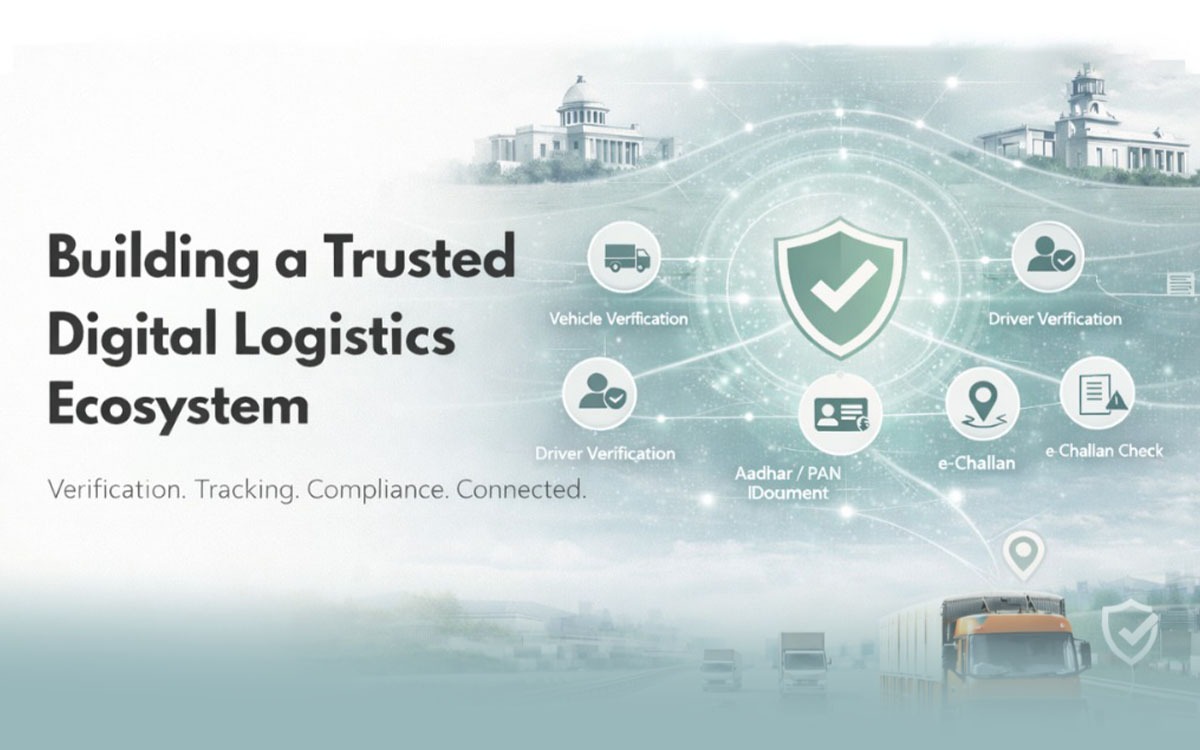
Its capabilities-such as vehicle verification, driver verification, vehicle tracking, e-Challan checks, and route history analysis-support the kind of operational clarity that businesses increasingly need in a digital environment.
This role is important because operational excellence begins with clarity. Verified records, complete checks, strong validation, and better visibility all support faster, better-quality execution.
Saral Check contributes to this by making operational information more reliable, more actionable, and easier to use in real workflows.
Why This Role Is Becoming More Important
As logistics systems become more connected, the value of trusted operational inputs continues to grow.
A business may have access to stronger digital infrastructure, and even greater value is created when that infrastructure supports better action at the ground level. That requires tools that can help users verify records, validate identities, check compliance status, track vehicles, and work with greater operational confidence.
This is why platforms like Saral Check are relevant in the larger digital logistics shift. They complement ecosystem-level infrastructure and make it more usable in practical settings.
A More Complete Way to Understand the Ecosystem
The current transformation can be understood in layers.
ULIP strengthens the connected data environment.
Institutional initiatives such as the NLDSL–Maharashtra MoU expand the use of that environment in logistics governance and coordination.
Platforms like Saral Check support the applied operational layer by enabling trust, verification, and day-to-day usability.
That layered relationship is important because digital transformation works best when integration and execution move together. One strengthens the ecosystem. The other helps users benefit from it in practical terms.
Business Value of This Direction
For logistics operators, fleet-linked businesses, and compliance-sensitive users, this direction has clear value.
- It supports better visibility.
- It reduces manual effort.
- It improves verification speed.
- It strengthens trust in operational data.
- It helps businesses make better decisions with greater confidence.
For MSMEs and smaller transport-dependent businesses, this is especially meaningful. As digital logistics infrastructure expands, its real value grows through how easily everyday users can access, verify, and act on information with confidence and convenience.
The Future of Logistics Will Be Connected and Trusted
India’s logistics ecosystem is moving toward a more mature operating model-one defined by digital connectivity and connected execution supported by trusted information.
That is the larger significance of current developments. Public digital infrastructure is improving visibility and system integration. Operational platforms are helping users turn that connectivity into practical business value.
In this environment, trust becomes part of the infrastructure itself.
And that is exactly where platforms like Saral Check hold long-term relevance: at the point where digital systems translate into reliable action.