


Why Vehicle Verification Is Essential for Modern Fleet Operations in 2026
The logistics industry is evolving rapidly.
Modern fleet operations are no longer judged solely by delivery speed or vehicle utilization. Today, businesses must also maintain compliance, ensure operational transparency, and manage risk effectively.
As supply chains become more connected and customer expectations continue to rise, even minor inaccuracies in vehicle records, insurance details, or driver information can create significant operational challenges.
This is why vehicle verification has become an essential part of fleet management.
Organizations are increasingly adopting verification-first processes to ensure that vehicles, drivers, and supporting documents are validated before critical operational decisions are made.
The question is no longer whether vehicle verification is important.
The question is whether a fleet can operate safely, compliantly, and efficiently without it.
What Is Vehicle Verification?
Vehicle verification is the process of validating vehicle-related information before a vehicle is assigned, purchased, onboarded, or dispatched.
The process typically includes reviewing:
- Registration details
- Vehicle ownership information
- Insurance status
- Operational records
- Compliance-related documents
- Driver credentials
- Supporting transport documentation
By verifying information before deployment, businesses can reduce uncertainty and improve decision-making across fleet operations.
Why Vehicle Verification Matters More Than Ever
1. Compliance Requirements Continue to Grow
Transport businesses operate in an environment where regulatory requirements are constantly evolving.
Maintaining accurate vehicle records and supporting documentation is becoming increasingly important for audits, inspections, and operational reviews.
A structured vehicle verification process helps businesses maintain reliable records and improve compliance readiness.
2. Modern Supply Chains Depend on Accurate Data
Every logistics decision depends on information.
Fleet allocation, route planning, shipment tracking, and customer communication all rely on accurate vehicle and driver data.
When inaccurate information enters the system, operational efficiency can be affected across multiple stages of the supply chain.
Verification helps create a stronger foundation for data-driven fleet management.
3. Fraud Risks Are Increasing
Fraud is becoming more sophisticated across the logistics ecosystem.
Documents may appear legitimate while containing outdated, incomplete, or inaccurate information.
As transport networks expand, businesses need stronger validation processes to identify discrepancies before vehicles enter active operations.
Vehicle verification provides an additional layer of confidence before critical decisions are made.
4. Fleet Risk Management Starts Before Dispatch
Most operational issues do not begin on the road.
They begin during onboarding, documentation review, or vehicle assignment.
A proactive verification process helps businesses identify potential issues before they become operational challenges.
The Hidden Cost of Unverified Fleet Information
A vehicle is assigned.
Documentation appears complete.
Operations move forward.
Later, the business discovers that information was inaccurate, incomplete, or required additional review.
At that point, the impact can extend beyond administration.
Potential consequences may include:
- Operational delays
- Compliance concerns
- Documentation disputes
- Increased administrative workload
- Reduced operational visibility
- Customer trust challenges
Verification helps organizations reduce these avoidable risks before dispatch.
Case Study 1: A Pre-Owned SUV Purchase That Required Additional Review
The Situation
A business owner planned to purchase a pre-owned SUV for operational use.
The seller provided registration documents, insurance information, and vehicle records that appeared complete.
Verification Process
Before finalizing the purchase, the buyer conducted a vehicle verification review using Saral Check.
Outcome
The verification process identified information that required further clarification before the transaction could proceed.
Business Impact
Instead of relying solely on submitted documents, the buyer was able to make a more informed decision based on verified information.
Key Insight: Vehicles should be verified before purchase decisions are finalized.
Case Study 2: Building a Verification-First Fleet Culture
The Situation
A growing organization managed company vehicles, executive vehicles, and operational fleet assets.
As fleet size increased, documentation management became more complex.
Verification Process
The company introduced a standardized vehicle verification process before onboarding, renewals, and vehicle assignments.
Outcome
Documentation became more organized and operational reviews became more consistent.
Business Impact
Managers gained greater confidence in the information used for everyday fleet decisions.
Key Insight: Strong fleet management begins with verified information.
What Should Be Verified Before Dispatch?
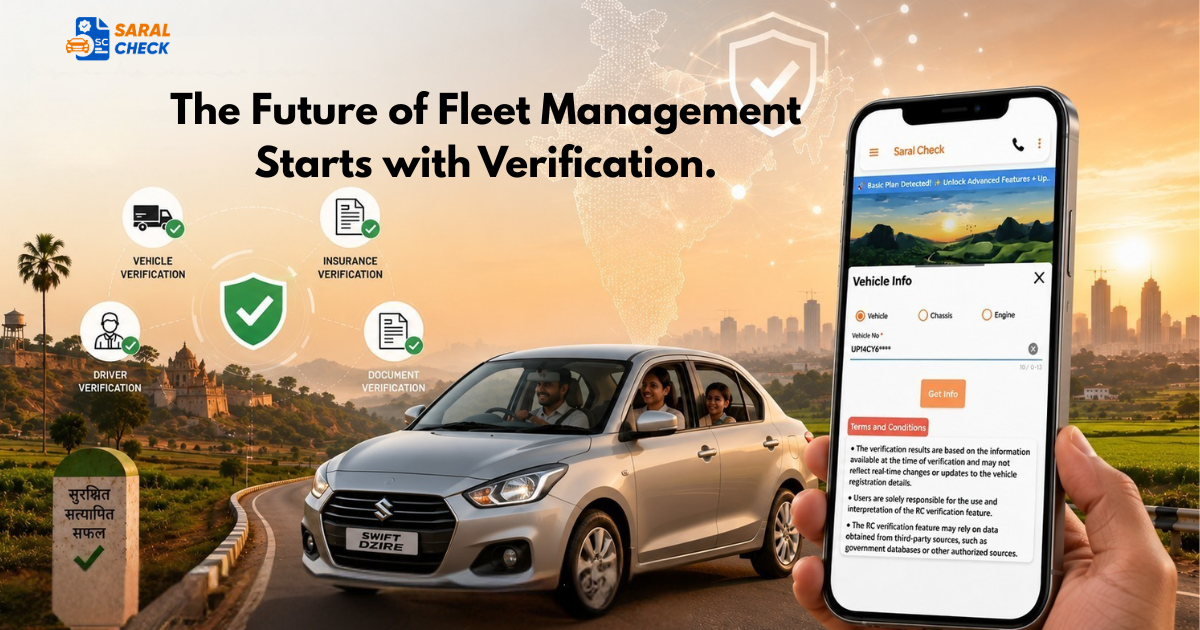
A verification-first operation typically reviews four critical areas.
Vehicle Information
- Registration details
- Vehicle records
- Ownership-related information
- Operational status
Insurance Verification
- Policy validity
- Coverage status
- Renewal information
- Expiry dates
Driver Verification
- Driver credentials
- License records
- Supporting documentation
- Identity validation
Operational Documents
- Compliance-related records
- Transport documentation
- Verification status of submitted information
- Supporting operational paperwork
The objective is not to create additional paperwork.
The objective is to reduce uncertainty before operational decisions are made.
The Rise of Digital Vehicle Verification
Traditional verification often relies on emails, screenshots, photocopies, and fragmented records.
As fleets scale, manual processes become increasingly difficult to manage.
Digital verification solutions help organizations:
- Improve verification efficiency
- Standardize review processes
- Maintain better records
- Increase operational visibility
- Support faster fleet onboarding
For modern transport businesses, digital verification is becoming as important as fleet tracking and route management systems.
How Saral Check Supports Verification-First Fleet Operations
As verification becomes a standard business requirement, logistics organizations need practical tools that integrate into existing workflows.
Saral Check helps transporters, fleet owners, brokers, and logistics companies validate critical operational information before making important decisions.
The platform supports:
- Vehicle Verification
- Driver Verification
- Insurance Verification
- Document Verification
- AI-Powered Verification Support
By introducing an additional layer of validation, organizations can improve operational confidence while supporting safer and more transparent fleet management practices.
Frequently Asked Questions
Vehicle verification is the process of validating vehicle records, registration details, insurance information, ownership data, and supporting documents before a vehicle is purchased, onboarded, or dispatched.
Vehicle verification helps organizations improve compliance, reduce operational risks, validate records, and make more informed fleet management decisions.
Businesses should review vehicle records, insurance status, driver credentials, ownership information, and supporting operational documents before assigning a vehicle
Yes. Vehicle verification helps identify discrepancies before they impact operations, enabling businesses to take corrective action earlier.
Digital verification improves efficiency, standardizes review processes, enhances record management, and supports better operational visibility across fleet operations.
Final Thoughts
The future of fleet management will not be defined only by larger fleets or faster deliveries.
It will be defined by the quality of information behind every operational decision.
Organizations that adopt vehicle verification as a standard business process are building stronger foundations for compliance, transparency, and long-term operational success.
Verification is no longer an optional administrative task.
It is becoming a core requirement of modern fleet operations.
And for logistics businesses preparing for the future, that shift may be one of the most important developments shaping the industry.