



Toll-Based Vehicle Tracking: How to Check a Truck’s Recent Highway Movement
Knowing where a truck has travelled is an important part of managing transportation operations. Whether you are a transporter, fleet owner, truck broker or logistics manager, you often need to check whether a vehicle has moved along its planned route.
But what happens when a truck does not have a GPS tracking device?
This is a common situation in India’s transport industry. Many businesses hire trucks from market operators, work with third-party vehicles or manage vehicles that do not have dedicated tracking hardware.
In such cases, toll-based vehicle tracking can provide another way to check recent highway movement.
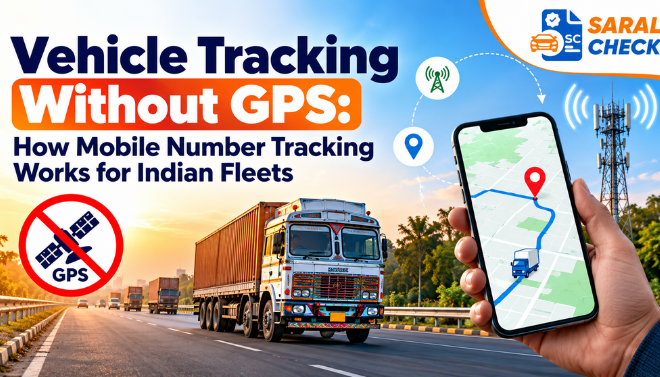
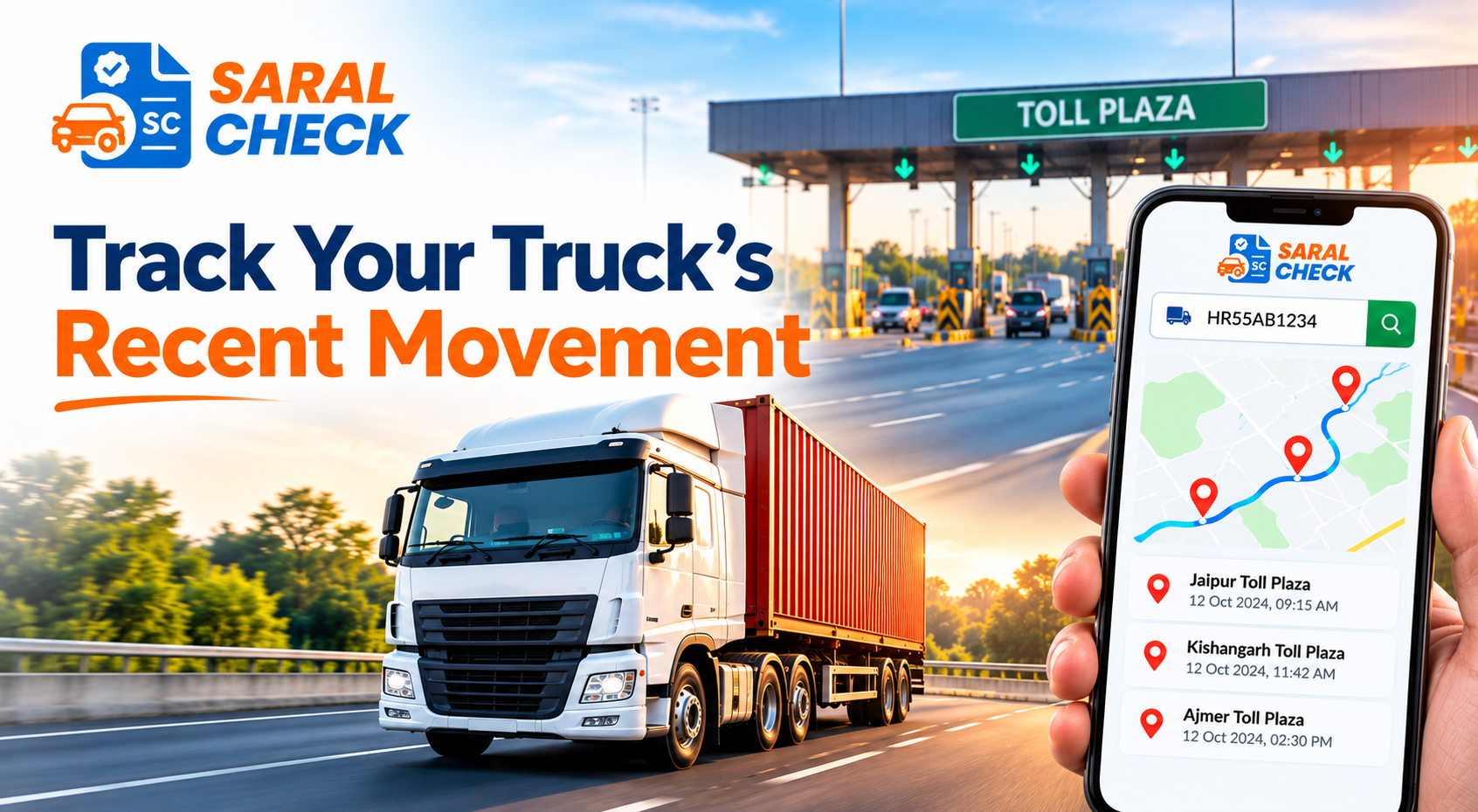
With SaralCheck, users can enter a vehicle registration number and view available toll plaza movement records from the last 72 hours. These records help identify toll plazas crossed, crossing dates and times, the latest recorded crossing and movement direction.
The process does not require a dedicated GPS device or physical installation.
In this guide, we explain how to check truck movement using a vehicle number, how toll-based tracking works, what information you can access and when this method is useful for transport businesses.
Can You Check a Truck’s Movement Using Its Vehicle Number?
Yes. You can check a truck’s recent highway movement using its vehicle registration number through a toll-based tracking service, provided relevant toll crossing records are available.
When a vehicle crosses an eligible toll plaza, a digital toll transaction record is generated. These records can help establish when and where the vehicle crossed a particular toll point.
A tracking service can use available records to present the vehicle’s recent movement history.
For example, consider a truck travelling from Delhi to Nagpur. The transporter wants to confirm whether the vehicle has progressed along the route but does not have access to its GPS location.
If the truck has crossed toll plazas during its journey, the available records can help the transporter identify its last recorded toll crossing and understand its recent highway movement.
This is particularly useful for businesses managing hired trucks and vehicles without dedicated GPS hardware.
Important: Toll-based tracking does not show the exact live location of a vehicle. It provides movement information at recorded toll crossing points.
What Is Toll-Based Vehicle Tracking?
Toll-based vehicle tracking is a method of reviewing a vehicle’s recent highway movement using digital toll plaza records.
In India, electronic toll collection through FASTag generates digital transaction records when eligible vehicles cross toll plazas.
These records can provide useful information associated with a vehicle’s highway movement.
Unlike conventional GPS tracking, toll-based tracking does not depend on a GPS device installed in the vehicle.
The main difference is how movement information is obtained:
- GPS tracking uses a dedicated tracking device or supported location system.
- Toll-based tracking uses available toll crossing records.
- GPS can provide continuous or periodic location updates.
- Toll-based tracking shows movement at recorded toll points.
This makes toll-based tracking useful when a transporter needs to check recent highway movement rather than monitor every movement in real time.
How Does Toll-Based Truck Tracking Work?
The process starts when a vehicle crosses a toll plaza and a digital transaction record is generated.
Here is a simplified explanation:
1. The truck starts its journey
A commercial vehicle begins travelling along its planned route.
2. The vehicle crosses a toll plaza
When the vehicle passes through an eligible electronic toll collection point, a transaction record is generated.
3. Toll crossing information is recorded
The record contains relevant information associated with the crossing, including the toll location and transaction time.
4. Available records are processed
A supported tracking service accesses relevant available toll movement information associated with the vehicle.
5. Recent movement details become available
Users can check the vehicle’s recorded toll crossings and understand its recent highway movement.
The information provides useful reference points for transporters who need to coordinate long-distance trips.
What Details Can You Check Using SaralCheck Vehicle Tracking?
SaralCheck provides access to available toll-based vehicle movement records from the last 72 hours.
Using the Vehicle Tracking service, users can check:
Toll plazas crossed: Identify the toll plazas recorded during the available tracking period.
Date and time: Review when each recorded toll crossing took place.
Last recorded toll crossing: Identify the latest available toll movement record.
Direction of movement: Understand the recorded movement direction where available.
Recent movement history: Review the sequence of available toll crossings.
These details help transporters understand a vehicle’s recent highway progress without installing a dedicated GPS device.
The information is particularly useful when a business needs a confirmed movement reference rather than relying entirely on verbal updates.
How to Track a Truck Using Its Vehicle Number on SaralCheck
SaralCheck makes recent toll-based movement checks straightforward.
Follow these steps:
- Download the SaralCheck app: Access the application on your smartphone.
- Log in: Sign in using your registered mobile number.
- Select Vehicle Tracking: Open the Vehicle Tracking service.
- Enter the vehicle registration number: Provide the truck number you want to check.
- View movement information: Review the available toll plaza records and recent movement details.
Once the records are displayed, you can use the latest crossing information to understand the vehicle’s recent highway movement.
Explore the SaralCheck Vehicle Tracking service to get started.
GPS Tracking vs Toll-Based Vehicle Tracking: Which Is Better?
Both technologies help businesses understand vehicle movement, but they serve different purposes.
| Feature | GPS Tracking | Toll-Based Tracking |
| Tracking method | GPS device or supported system | Toll plaza records |
| Hardware | Generally requires a GPS device | No dedicated GPS device |
| Location updates | Continuous or periodic | At recorded toll crossings |
| Live location | Available when active | Not available |
| Route visibility | Detailed location history | Recent toll crossing history |
| Best use | Continuous fleet monitoring | Recent highway movement checks |
When Is GPS Tracking the Better Choice?
GPS tracking is more appropriate when your business requires:
- Continuous vehicle location updates.
- Route deviation monitoring.
- Speed and stoppage information.
- Detailed trip history.
- Real-time fleet management.
When Is Toll-Based Tracking Useful?
Toll-based tracking can be a practical option when:
- A hired truck does not have GPS hardware.
- You need to check recent highway movement.
- You want to identify the last recorded toll crossing.
- You manage temporary or third-party vehicles.
- You need another reference for trip coordination.
The two methods should not be considered direct replacements. The right option depends on how frequently you need location information.
Why Do Transporters Need Recent Truck Movement Information?
For transport businesses, even a small information gap can create coordination challenges.
A truck may leave a warehouse on time, but the operations team may not know whether it has progressed along the route.
Recent toll crossing records can help address some of these information gaps.
1. Managing Hired and Market Vehicles
Transporters frequently arrange trucks from third-party operators to fulfil customer requirements.
These vehicles may not have GPS devices connected to the transporter’s system.
Toll-based movement information can provide an additional way to check their recent highway progress.
2. Reducing Unnecessary Driver Follow-Ups
Repeated calls for location updates can interrupt drivers during long journeys.
When relevant toll records are available, transporters can use them as an additional reference before requesting an update.
3. Improving Customer Communication
Customers often ask for updates about their shipments.
Knowing the last recorded toll crossing can help operations teams communicate the vehicle’s recent highway progress more clearly.
4. Supporting Warehouse Coordination
Warehouse teams need to prepare for incoming vehicles, manage unloading arrangements and coordinate labour.
Recent movement records can provide another input when planning these activities.
However, a toll crossing should not be treated as a guaranteed arrival-time estimate.
5. Supporting Long-Distance Transport Operations
For inter-state journeys, toll crossing information can provide useful reference points along the route.
Transporters can review available movement records to understand the vehicle’s progress between major highway locations.
What Are the Limitations of Toll-Based Vehicle Tracking?
Before choosing any tracking method, it is important to understand what it can and cannot provide.
Toll-based tracking is useful for reviewing recorded highway movement, but it does not provide complete vehicle monitoring.
Here are its main limitations:
1. No continuous live location: It does not provide second-by-second location updates.
2. Dependent on toll crossings: Movement information becomes available when relevant toll records are generated.
3. No visibility between toll plazas: The vehicle’s exact position between two recorded crossings cannot be established through those records alone.
4. Limited history: SaralCheck’s service provides available recent toll movement information from the last 72 hours.
5. No guaranteed arrival prediction: Traffic, route diversions, stoppages and road conditions can affect actual travel time.
For businesses requiring continuous fleet visibility, GPS tracking remains a more suitable option.
Toll-Based Tracking vs Mobile Number-Based Tracking
Apart from GPS and toll-based tracking, businesses can also consider mobile number-based vehicle tracking.
However, these methods work differently.
| Tracking method | Information source | Main purpose |
| GPS tracking | GPS tracking hardware | Continuous or periodic location monitoring |
| Toll-based tracking | Toll crossing records | Recent highway movement |
| Mobile tracking | Driver’s mobile phone and network signals | Trip movement visibility |
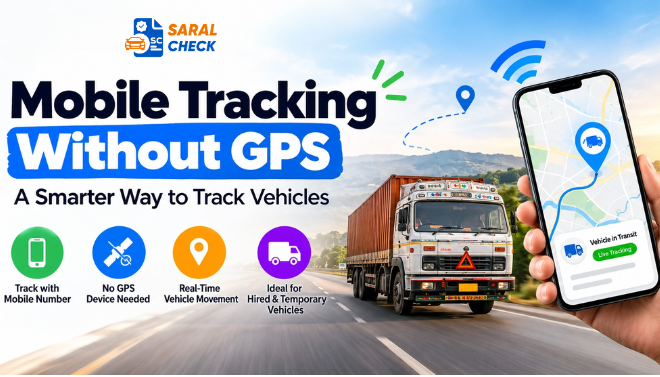
SaralCheck also offers Mobile Number-Based Vehicle Tracking, which helps businesses check vehicle movement using the driver’s registered mobile number and available mobile network information.
This option can be useful for hired vehicles and transport operations where GPS hardware is unavailable.
The choice depends on the type of tracking information your business needs.
Frequently Asked Questions
1. How can I check truck movement using a vehicle number?
You can use a toll-based vehicle tracking service such as SaralCheck. Enter the vehicle registration number and review the available recent toll crossing records.
2. Can I track a truck without installing GPS?
Yes. SaralCheck’s toll-based tracking service allows users to check available recent highway movement using toll plaza records without installing a dedicated GPS device.
3. How many days of movement history are available on SaralCheck?
SaralCheck provides available toll-based movement records from the last 72 hours.
4. Does toll-based tracking provide live vehicle location?
No. It shows movement information at recorded toll crossing points. It does not provide continuous live location updates.
5. What information is available through toll-based tracking?
Available information includes toll plazas crossed, crossing date and time, the latest recorded toll crossing and movement direction.
6. Is toll-based tracking useful for commercial trucks?
Yes. It can help transporters, fleet owners, brokers and logistics companies check recent highway movement, especially when managing hired or GPS-free vehicles.
7. What is the difference between mobile tracking and toll-based tracking?
Mobile tracking uses the driver’s mobile phone and mobile network information. Toll-based tracking uses available records generated at toll plazas. Both provide different types of movement visibility.
8. Can toll-based tracking identify a vehicle’s exact current location?
No. It can identify the last available recorded toll crossing, but cannot establish the vehicle’s exact current position between toll points.
Check Recent Truck Movement with SaralCheck
Managing transport operations becomes easier when you have access to useful vehicle movement information.
For transporters working with hired vehicles, third-party trucks or vehicles without dedicated GPS devices, toll-based tracking provides another way to check recent highway movement.
SaralCheck helps users review available toll crossing records from the last 72 hours using a vehicle registration number.
You can check the latest recorded toll crossing, review movement timestamps and use this information to support better trip coordination.
Want to check a truck’s recent highway movement?
Visit SaralCheck Vehicle Tracking and explore a simpler way to check recent vehicle movement.
SaralCheck – Making Vehicle Tracking and Verification Simpler.