





How to Verify a Vehicle Before Buying in India
Buying a used vehicle is a major decision. The price may look attractive, the vehicle may appear well-maintained, and the seller may provide all the necessary papers. But before you make the payment, there is one step you should not skip: vehicle verification.
A vehicle can look perfectly fine from the outside and still have issues related to registration, insurance, fitness, age, or other records.
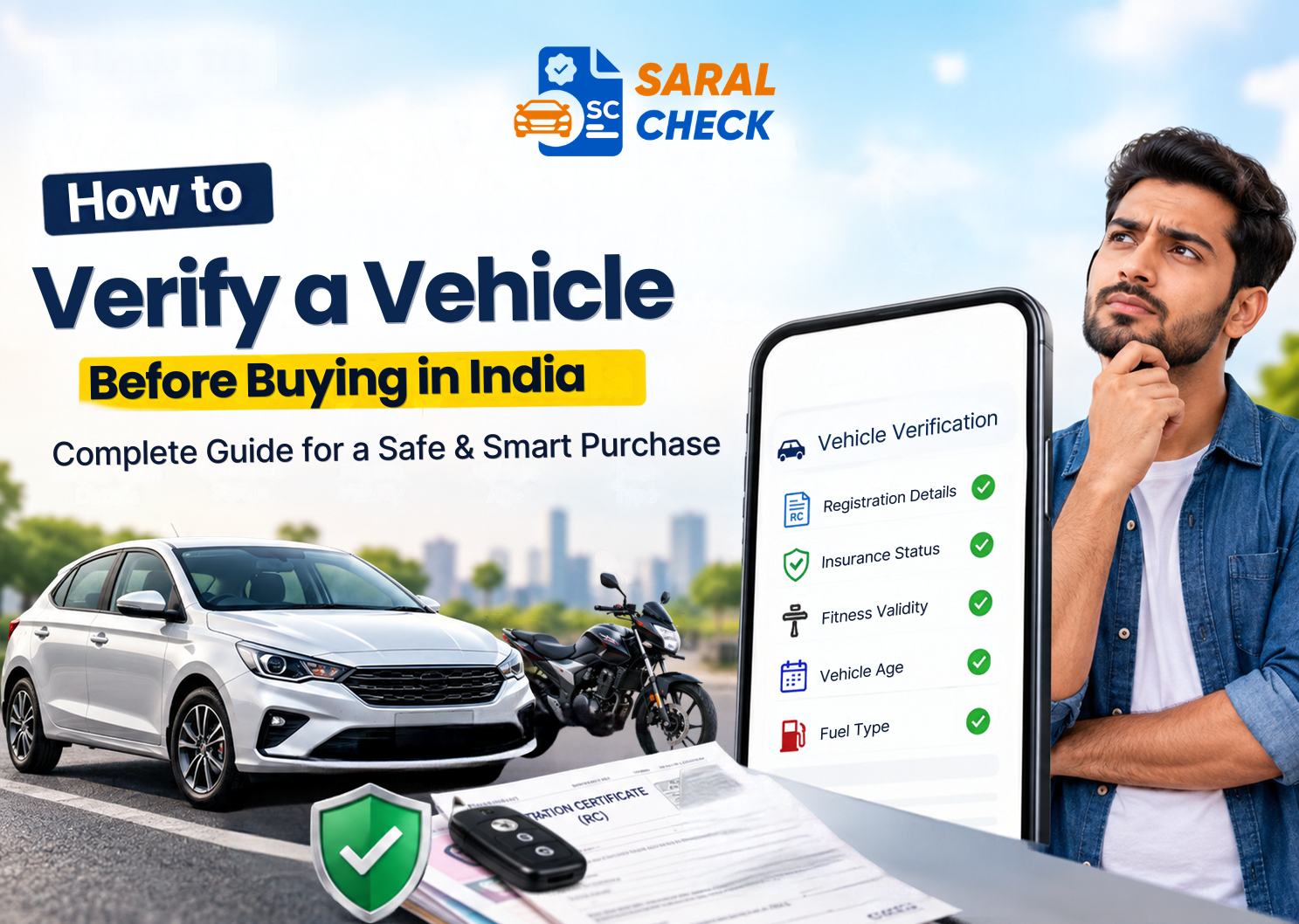
Vehicle verification helps you check important vehicle details before buying or using a vehicle. Depending on the available records and service, this can include registration information, registration validity, insurance status, fitness validity, fuel type, vehicle age and other RTO-related details.
For buyers, transporters, fleet owners and businesses, checking these details before making a decision can make the buying process more informed and reduce avoidable surprises.
This guide explains how to verify a vehicle before buying in India, what details you should check, how online vehicle verification works, and what you should do when the information does not match the seller’s claims.
Quick Answer: How Do You Verify a Vehicle Before Buying?
To verify a vehicle before buying, start with its registration number and check the available vehicle records through a reliable vehicle verification service or official government vehicle services.
A practical verification process is:
- Collect the vehicle registration number.
- Check the registration details and validity.
- Review insurance status and fitness validity where available.
- Check the vehicle’s age and fuel type.
- Compare the online information with the RC and other documents provided by the seller.
- Physically inspect the vehicle before completing the purchase.
- Investigate any mismatch instead of relying only on verbal explanations.
Online verification is useful, but it should be treated as one part of the overall buying process, not as a replacement for document review and physical inspection.
What Is Vehicle Verification?
Vehicle verification is the process of checking available records and details associated with a vehicle to understand its registration and compliance status.
In India, vehicle-related services are supported through government systems such as VAHAN and Parivahan. The official Parivahan ecosystem includes services related to vehicle registration, ownership transfer, fitness, tax, permits and other vehicle transactions.
A vehicle verification check can help you review details such as:
- Registration date and validity
- Insurance status
- Fitness validity
- Vehicle age
- Fuel type
- RTO-related information
- Other available vehicle records
SaralCheck’s vehicle verification service specifically lists registration date and validity, fuel type, insurance status, fitness validity and vehicle age among the details users can check.
The exact information available can depend on the vehicle, registration records and applicable service.
Why Is Vehicle Verification Important Before Buying?
Buying a second-hand vehicle based only on appearance or the seller’s statement can leave important questions unanswered.
For example, a seller may tell you that a commercial vehicle is ready for work. Before accepting that statement, you may want to check whether its registration and relevant documents are valid.
Similarly, if you are purchasing a used car or bike, checking the available records can help you compare the seller’s information with the vehicle records.
1. It Helps You Check Registration Details
Registration information can tell you important facts about the vehicle’s registration history and validity.
This is particularly useful when you are purchasing a used vehicle and want to confirm that the basic registration information matches the documents provided.
2. It Helps You Review Insurance Status
Insurance is an important part of vehicle documentation.
Checking the available insurance status before buying can help you identify whether the information provided by the seller needs further verification.
3. It Helps You Check Fitness Validity
Fitness-related information is particularly relevant for commercial and transport vehicles.
The Parivahan ecosystem provides vehicle-related services covering fitness and other transport requirements.
4. It Helps You Understand Vehicle Age
The age of a vehicle can influence its value, operating plans and suitability for your requirements.
If a seller describes a vehicle as relatively new, checking the available registration information can help you verify the claim.
5. It Can Help Identify Information Mismatches
One of the most useful parts of verification is comparison.
If the seller’s information, physical vehicle, RC and available online records do not agree, stop and investigate before proceeding.
What Details Should You Check During Vehicle Verification?
Before buying a used vehicle, create a simple verification checklist.
| Vehicle Detail | Why Check It? |
| Registration number | Identifies the vehicle for record checks |
| Registration date | Helps understand registration history and vehicle age |
| Registration validity | Helps determine the current registration status |
| Insurance status | Helps identify available insurance information |
| Fitness validity | Important for relevant vehicles, especially commercial vehicles |
| Vehicle age | Helps evaluate the vehicle against the asking price |
| Fuel type | Confirms the recorded fuel category |
| RTO information | Helps compare registration-related information |
| RC details | Should be compared with available vehicle records |
| Chassis/engine details | Should be physically compared with documents where applicable |
Not every online service will display every field for every vehicle. Therefore, use the information that is actually available and compare it with the original vehicle documents.
How to Verify a Vehicle Online in India
Online vehicle verification can make the initial checking process much easier.
The official Parivahan/VAHAN ecosystem provides vehicle-related citizen services, including registration and other vehicle transactions. VAHAN’s citizen service interface allows users to begin vehicle-related services using a vehicle registration number and relevant registration authority information.
For a simple verification workflow through SaralCheck:
Step 1: Keep the Vehicle Registration Number Ready
Ask the seller for the vehicle registration number.
Make sure the number you enter is exactly the same as the number displayed on the vehicle and documents.
Step 2: Enter the Vehicle Details
Use a vehicle verification service such as SaralCheck and enter the required vehicle information.
SaralCheck’s current process describes five basic steps: download the app, log in using a mobile number, select Vehicle Info, enter vehicle details and view the available vehicle information.
Step 3: Review the Available Information
Depending on the available records, review details such as:
- Registration date and validity
- Insurance status
- Fitness validity
- Vehicle age
- Fuel type
Step 4: Compare the Results With the Documents
This step is important.
Do not simply look at the online result and move ahead.
Compare the available information with:
- RC
- Insurance documents
- Fitness certificate, where applicable
- Vehicle details
- Seller’s statements
- Physical vehicle information
Step 5: Investigate Any Mismatch
If the information does not match, ask the seller for clarification and supporting documents.
Do not make a payment simply because the seller says the difference is a technical issue.
How to Check RC and Registration Details
The Registration Certificate, commonly called the RC, is one of the key documents associated with a registered vehicle.
When checking a used vehicle, compare the RC information with the available vehicle records.
Pay attention to:
- Registration number
- Registration date
- Vehicle category
- Vehicle details
- Registration validity, where applicable
- Information related to ownership or transfer, where relevant
The official Parivahan system provides vehicle registration-related services including transfer of ownership, change of address, duplicate RC and registration renewal.
If the seller is claiming that ownership transfer is already completed, do not rely only on a verbal confirmation. Check the relevant documentation and transaction status.
Why Chassis and Engine Number Verification Matters
The registration number is not the only identification detail that matters.
The chassis number and engine number can also be important when comparing the physical vehicle with its documents.
During a vehicle inspection:
- Locate the relevant identification numbers on the vehicle.
- Compare them with the documents available to you.
- Look for signs of alteration, damage or inconsistency.
- If something does not match, ask for clarification before purchasing.
This is especially important when buying an expensive used vehicle or adding a commercial vehicle to a fleet.
An online check and a physical inspection work together. One should not automatically be treated as a replacement for the other.
Used Vehicle Verification: What Should Buyers Check?
If you are buying a second-hand car, bike, truck or other vehicle, verify the basic records before negotiating the final price.
Used Vehicle Verification Checklist
Documents
- RC
- Insurance information
- Fitness information where applicable
- Other relevant vehicle documents
Vehicle Records
- Registration details
- Registration validity
- Vehicle age
- Insurance status
- Fitness validity
- Fuel type
Physical Vehicle
- Registration number
- Chassis number
- Engine number
- Odometer reading
- Tyres
- Body condition
- Signs of major repair or accident damage
Seller Information
- Seller’s identity and ownership-related documents
- Reason for selling
- Any pending documentation or transfer process
- Information about previous use
Remember that online vehicle verification primarily helps with available records. It does not tell you everything about the mechanical or physical condition of the vehicle.
For example, an online record cannot replace a professional inspection of the engine, gearbox, suspension, brakes or body structure.
Commercial Vehicle Verification for Transporters and Fleet Owners
For transporters and fleet operators, vehicle verification is not only about buying a vehicle.
It can also become part of regular fleet documentation checks.
A commercial vehicle may be used continuously for:
- Goods transportation
- Delivery operations
- Logistics
- Construction
- Distribution
- Business travel
If a vehicle’s required documents are not valid, it can create operational complications.
That is why fleet owners can benefit from maintaining a simple verification process for vehicles before adding them to their operations.
SaralCheck positions its vehicle verification service for individuals, transporters, fleet owners, businesses, brokers and dealers, and supports different vehicle categories including cars, bikes, trucks, buses and commercial vehicles.
What Fleet Owners Can Check
Depending on the available records, fleet teams can review:
- Registration validity
- Insurance status
- Fitness validity
- Vehicle age
- Fuel type
- Other available vehicle information
For businesses managing multiple vehicles, maintaining a document-validity checklist can also make routine compliance reviews easier.
What Problems Can Vehicle Verification Help You Identify?
Vehicle verification does not guarantee that every possible problem will be discovered.
However, it can help you identify information that deserves further investigation.
For example:
Registration Information That Does Not Match
If the vehicle details shown in available records differ from the documents provided by the seller, investigate before buying.
Expired Insurance
If insurance status does not match the seller’s claim, request the relevant documentation.
Expired Fitness
For applicable vehicles, fitness validity should be checked before the vehicle is put into commercial use.
Vehicle Age Different From the Seller’s Claim
A difference in registration information and the seller’s description should be clarified before negotiating the price.
Incorrect Vehicle Information
If the recorded fuel type or other basic information differs from the physical vehicle, investigate the reason.
The purpose of verification is not to automatically label a vehicle as problematic. It is to give you information that can help you ask better questions before making a decision.
Online Vehicle Verification vs Physical Inspection
Both approaches have different purposes.
| Online Vehicle Verification | Physical Inspection |
| Checks available vehicle records | Checks actual physical condition |
| Reviews registration information | Checks body and mechanical condition |
| Can show insurance status where available | Can inspect tyres, brakes, engine and suspension |
| Helps check fitness validity where available | Can identify physical damage |
| Helps understand vehicle age | Can compare chassis/engine identification numbers |
| Useful before meeting or buying | Essential before final purchase |
The safest approach is to use both.
First verify the available records. Then inspect the actual vehicle and documents before completing the transaction.
When Should You Verify a Vehicle?
You do not need to wait until the day of purchase.
Vehicle verification can be useful at several stages.
Before Visiting the Seller
If you already have the registration number, you can perform an initial check before spending time travelling to inspect the vehicle.
Before Negotiating the Price
Vehicle age, registration information and other records can help you ask more informed questions.
Before Making an Advance Payment
Verify the available information before transferring a significant amount of money.
Before Final Purchase
Complete the document and physical checks before making the final payment.
Before Adding a Vehicle to Your Fleet
Transporters and businesses can verify relevant vehicle records before assigning a vehicle to operations.
Vehicle Verification Checklist Before Buying
Use this quick checklist before finalizing a used vehicle:
Registration
☐ Registration number checked
☐ Registration details reviewed
☐ Registration validity checked where applicable
Documents
☐ RC reviewed
☐ Insurance status checked
☐ Fitness information checked where applicable
☐ Other relevant documents reviewed
Vehicle Details
☐ Vehicle age checked
☐ Fuel type confirmed
☐ Chassis number compared
☐ Engine number compared
Physical Inspection
☐ Body condition inspected
☐ Tyres checked
☐ Engine inspected
☐ Brakes checked
☐ Suspension checked
☐ Odometer reading reviewed
Final Decision
☐ Seller’s information matches available records
☐ No unexplained mismatch remains
☐ Documents are available for review
☐ Ownership/transfer requirements are understood
How SaralCheck Helps With Vehicle Verification
Checking vehicle information should not have to be complicated.
SaralCheck provides an online vehicle verification service that allows users to check available vehicle information using vehicle details. Its current service page highlights information such as registration date and validity, fuel type, insurance status, fitness validity and vehicle age.
The service is positioned for different users, including:
- Used vehicle buyers
- Individual vehicle owners
- Transporters
- Fleet owners
- Businesses
- Vehicle dealers and brokers
For someone considering a second-hand vehicle, this type of preliminary verification can provide useful information before moving to document review and physical inspection.
You can explore SaralCheck’s vehicle verification service here: SaralCheck Vehicle Verification
Frequently Asked Questions About Vehicle Verification
Vehicle verification is the process of checking available vehicle records and details to understand registration, insurance, fitness and other relevant information associated with a vehicle.
Start with the vehicle registration number and check the available records through a reliable vehicle verification service or official vehicle services. Then compare the results with the RC, insurance documents and physical vehicle.
Yes. Online vehicle services are available through India’s official vehicle-service ecosystem, including VAHAN and Parivahan. Third-party services such as SaralCheck also provide vehicle verification features.
SaralCheck currently lists registration date and validity, fuel type, insurance status, fitness validity and vehicle age among the vehicle details available through its verification service.
Verification can help you compare the seller’s information with available vehicle records and identify details that require further checking before you commit money to the purchase.
No. Online verification should be combined with document checking and physical inspection. Vehicle records cannot replace an inspection of the vehicle’s mechanical and physical condition
Yes. SaralCheck states that its service supports trucks, buses and other commercial vehicles, along with cars, bikes and scooters.
It can be useful to check available registration, insurance, fitness and other relevant records before assigning a vehicle to business operations.
Do not ignore the difference. Ask the seller for supporting documents and clarification. If the mismatch cannot be satisfactorily explained, consider getting professional or official assistance before proceeding.
The Ministry of Road Transport and Highways provides vehicle-related services through the Parivahan/VAHAN ecosystem, including registration-related and other vehicle services.
Final Takeaway
A used vehicle may look good, but its records deserve the same attention as its physical condition.
Vehicle verification is a practical first step before buying or putting a vehicle into business use. Checking registration information, insurance status, fitness validity, vehicle age and other available records can help you compare the information you receive with the vehicle’s documented details.
For a complete buying decision, combine online verification with RC/document checking, physical inspection and proper ownership-transfer procedures.
If you are planning to buy a used car, bike, truck, bus or commercial vehicle, start by checking the available vehicle records before making a financial commitment.
Verify first. Compare the details. Ask questions. Then decide.