

Mobile Tracking Without GPS: A Smarter Way to Track Vehicles
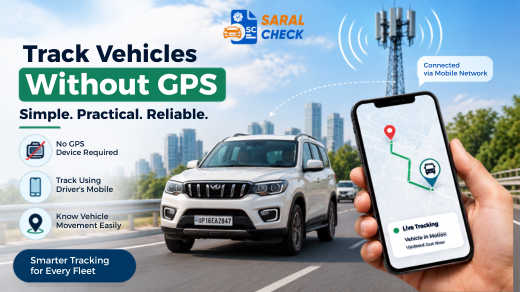
Mobile tracking without GPS allows you to monitor a vehicle using the driver’s mobile phone instead of installing a dedicated GPS tracking device.
It uses mobile network connectivity to estimate a vehicle’s location and movement. This makes it a practical option for school buses, hired vans, temporary vehicles, and mixed fleets where installing GPS hardware may not always be convenient.
For schools and transport operators, the key benefit is simple: you can add vehicle visibility without installing a GPS tracking device.
What Is Mobile Tracking Without GPS?
When people think about vehicle tracking, they often think of a GPS tracker installed inside the vehicle.
But not every vehicle has GPS hardware.
Mobile tracking without GPS provides another way to monitor vehicle movement using the driver’s mobile phone and its connection to nearby mobile network towers.
As the phone moves from one area to another, its network connection changes between available towers. This information can be used by a tracking platform to estimate the vehicle’s approximate location, movement, direction, and stoppages.
The major difference is that there is no separate GPS tracking device installed in the vehicle.
This can be particularly useful for schools and fleet operators managing hired, temporary, or third-party vehicles.
Why Are Some Vehicles Still Running Without GPS?
This situation is especially common with school vans and hired transport vehicles.
For example, a school may have its own buses equipped with GPS while also using third-party transport operators for additional routes. Those hired vehicles may not have a dedicated tracking device installed.
There are several practical reasons why a GPS tracker may not be installed in every vehicle:
- The vehicle may be used only temporarily.
- The vehicle may belong to an external transport vendor.
- Installing and maintaining tracking hardware may require additional time.
- A replacement vehicle may need to be added quickly.
- An existing GPS device may temporarily stop working.
This can create a vehicle visibility gap.
Mobile tracking can help reduce that gap by using the driver’s mobile connection instead of depending entirely on dedicated GPS hardware.
How Does Mobile Tracking Using a Mobile Number Work?
The basic concept is straightforward.
Step 1: The Driver Uses a Mobile Phone
The driver’s smartphone remains connected to the mobile network during the journey.
Step 2: The Phone Connects With Nearby Mobile Towers
As the vehicle moves, the phone communicates with available mobile network towers.
Step 3: The Tracking Platform Processes the Updates
A tracking platform processes the available mobile-location information.
Step 4: Vehicle Movement Is Displayed
Depending on the tracking service and network availability, useful journey information may include:
- Approximate vehicle location
- Trip movement
- Route direction
- Journey progress
- Significant stoppages
Step 5: Authorized Users Check the Journey
School administrators, fleet managers, or other authorized users can check the vehicle’s journey status without repeatedly calling the driver.
The biggest advantage is the absence of dedicated GPS hardware, vehicle wiring, and additional tracking equipment.
An active mobile connection remains an important requirement.
Mobile Tracking vs GPS Tracking: What’s the Difference?
Both technologies can improve vehicle visibility, but they are designed for somewhat different tracking requirements.
| Feature | Mobile Tracking Without GPS | Traditional GPS Tracking |
| Dedicated GPS device | Not required | Required |
| Vehicle installation | No dedicated vehicle installation | Device installation required |
| Location precision | Generally approximate | Generally more precise |
| Mobile network | Used for connectivity | Commonly used to transmit GPS data |
| Hired vehicles | Very useful | Requires device installation |
| Temporary vehicles | Convenient | Less convenient to deploy |
| Hardware maintenance | No dedicated tracking hardware | Required for the installed device |
| Best suited for | Basic movement visibility | Detailed vehicle tracking |
GPS tracking remains more suitable when precise and continuous location information is required.
However, mobile tracking can be a practical alternative or an additional tracking layer when the main requirement is to understand:
- Whether the vehicle has started
- Where the vehicle is approximately located
- Whether it is moving along the route
- Whether it has stopped for an unusual amount of time
The right choice depends on the tracking requirements of the fleet.
Why Mobile Tracking Matters for School Transport
School transportation involves more than simply moving students from one location to another.
Transport teams may need to coordinate:
- Multiple routes
- Pickup timings
- Drop-off schedules
- Drivers
- Owned buses
- Hired vans
- Parent communication
- Unexpected delays
When a parent asks, “Where is the school bus?”, the transport team needs a reliable way to provide an update.
Without vehicle visibility, staff may need to call the driver and wait for a response.
Mobile vehicle tracking provides another option: transport teams can check the vehicle’s journey status instead of relying entirely on phone calls.
This can make day-to-day school transport coordination more convenient.
Key Benefits of Mobile Number-Based Vehicle Tracking
1. No GPS Device Required
One of the biggest advantages is that a dedicated GPS tracking device does not need to be installed inside the vehicle.
2. Useful for Hired Vehicles
Schools and businesses can add tracking visibility to vehicles operated by external vendors where installing GPS hardware may not be practical.
3. Quick to Deploy
A mobile-based tracking approach can be easier to introduce when vehicles need monitoring without additional hardware installation.
4. Helps Reduce Unnecessary Driver Calls
Instead of repeatedly calling drivers for updates, authorized transport staff can check available vehicle movement information.
5. Supports Temporary Vehicles
When a regular bus or fleet vehicle is unavailable and a replacement vehicle is arranged, mobile tracking can help maintain visibility during the temporary operation.
6. Simple for Transport Teams
The concept is easy to understand: the vehicle is monitored through the driver’s registered mobile connection.
7. Adds Another Layer of Fleet Visibility
Organizations already using GPS tracking can use mobile tracking for vehicles that do not have dedicated GPS hardware.
Is Mobile Tracking Accurate Enough?
This is one of the most important questions to consider before choosing a tracking method.
Mobile tracking and GPS tracking do not provide exactly the same level of location precision.
GPS tracking uses satellite-based positioning, while mobile tracking relies on information associated with mobile network connectivity.
As a result, mobile-based tracking generally provides an approximate location rather than the precise positioning associated with dedicated GPS tracking.
The accuracy and update frequency can also depend on factors such as mobile network coverage and the surrounding environment.
For everyday school transport, however, the goal may not always be to identify a vehicle’s exact position down to a few meters.
Transport teams may primarily want to know:
Has the vehicle started?
Is it moving along the route?
Where is it approximately?
Has it stopped for an unusually long time?
For these types of requirements, mobile tracking can provide useful visibility.
Can Mobile Tracking Work as a Backup to GPS?
Mobile tracking does not necessarily need to replace GPS.
In many transport operations, using both technologies for different vehicles can make practical sense.
For example:
Owned school buses → GPS tracking
Hired vans → Mobile tracking
Temporary replacement vehicles → Mobile tracking
GPS device unavailable → Mobile tracking as an additional visibility layer
This approach allows schools and fleet operators to manage different vehicle types without requiring every vehicle to use exactly the same tracking setup.
Mobile Tracking and Driver Verification Should Work Together
Knowing where a vehicle is does not automatically tell you who is driving it.
That is why vehicle tracking can be considered part of a broader transport management and safety process.
Before assigning a hired vehicle to a school route, transport teams can also consider driver verification, including checking relevant driver and vehicle information.
A stronger process can look like this:
Verify the driver → Verify the vehicle → Track the journey → Monitor the route
Each step addresses a different part of vehicle and school transport management.
How Can Parents Benefit From Mobile Vehicle Tracking?
Parents usually don’t need to understand how vehicle tracking technology works.
They simply want useful information about the journey.
Has the bus left?
Where is it now?
Is it delayed?
If a school or transport operator provides authorized access through a tracking application or shared tracking link, parents can check the available journey status instead of repeatedly calling the driver or school office.
For working parents, this can make daily school transportation more predictable and convenient.
When Should You Consider Mobile Tracking Without GPS?
Mobile tracking may be worth considering when:
- Your vehicle does not have a GPS tracker.
- You manage hired school vans.
- You frequently use temporary vehicles.
- You need a tracking option without dedicated hardware installation.
- You already use GPS but need additional coverage for other vehicles.
- You need basic route and movement visibility.
- You manage a mixed fleet.
The right tracking solution ultimately depends on the level of accuracy, coverage, control, and monitoring your operation requires.
How to Get Started With Mobile Vehicle Tracking
If you manage vehicles without GPS and want a simple way to add tracking visibility, mobile-based vehicle tracking can be a practical starting point.
Saral Check’s mobile tracking service allows vehicle movement to be monitored using the driver’s mobile number without installing a dedicated GPS device.
For schools managing a combination of owned buses, hired vans, and temporary vehicles, this approach can make it easier to introduce tracking across different vehicle types.
Explore Saral Check’s Mobile Tracking Service
Frequently Asked Questions About Mobile Tracking Without GPS
No. Mobile tracking without GPS uses the driver’s mobile network connection to provide vehicle movement information. A dedicated GPS tracking device is not required.
It can work with a smartphone that has an active mobile network connection, subject to the tracking service’s technical requirements and network availability.
Mobile-based tracking generally provides an approximate location rather than the pinpoint accuracy associated with dedicated GPS positioning. Accuracy and update frequency can vary depending on mobile network coverage.
Yes. Hired vehicles that do not have GPS hardware can potentially be monitored through the driver’s mobile connection, making mobile tracking a practical option for some school transport operations.
Can mobile tracking completely replace GPS?
It depends on the use case.
If you need highly precise and continuous vehicle positioning, dedicated GPS tracking may be more suitable.
If you mainly need basic movement visibility for hired, temporary, or non-GPS vehicles, mobile tracking can be a useful alternative.
Is mobile vehicle tracking useful for schools?
Yes. It can help transport teams monitor vehicle movement, reduce unnecessary driver calls, and add visibility to vehicles that do not have dedicated GPS hardware.
Is the driver’s location data private?
Location information should be handled through appropriate access controls and used only for authorized tracking purposes. Schools and transport operators should review the provider’s privacy and data-handling practices before deployment.
Final Takeaway
Vehicle tracking doesn’t always have to start with installing a GPS device.
For schools, fleet operators, and businesses managing hired or temporary vehicles, mobile tracking without GPS can provide a practical way to add vehicle visibility through the driver’s mobile connection.
It may not provide the same precision as dedicated GPS tracking, but for everyday questions such as where the vehicle is, whether it is moving, and whether it has stopped, it can be a useful tracking option.
The smarter approach is not always about choosing one technology over another.
It is about choosing the right tracking method for the right vehicle.