



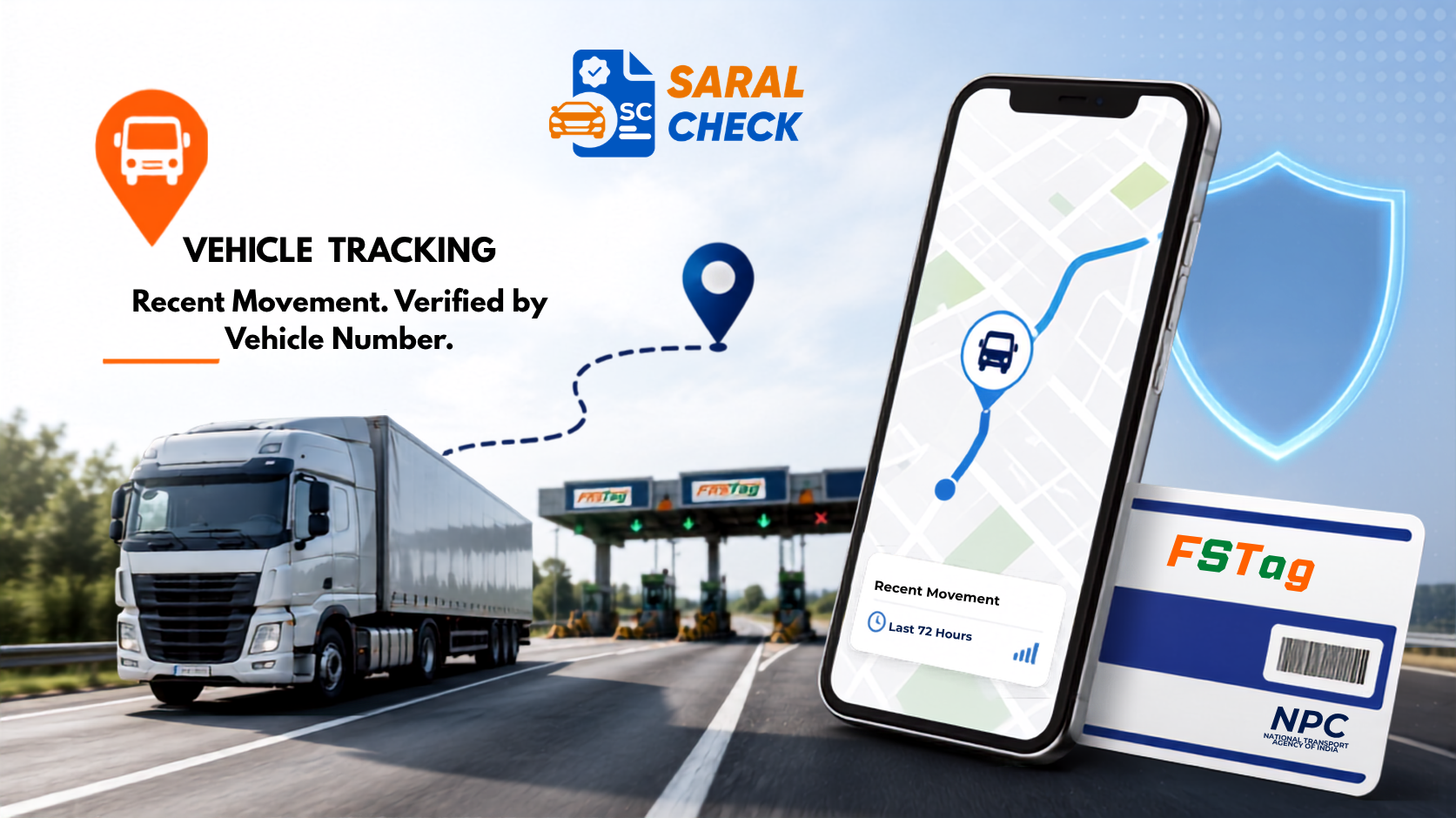
Vehicle Tracking: How to Track a Vehicle by Number Online
Vehicle tracking helps you find out where a vehicle has travelled or where it was recently detected. Traditionally, tracking required a GPS device installed in the vehicle. Today, toll-based tracking provides another option for checking recent highway movement using verified toll plaza records.
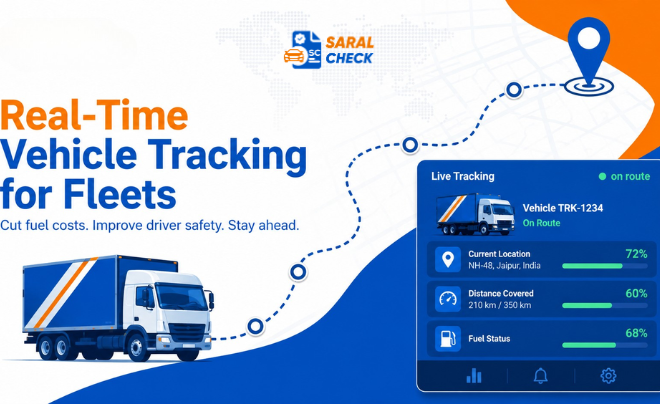
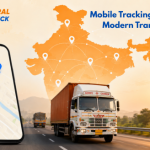
With Saral Check, users can enter a vehicle registration number and view recent toll movement details, including toll plazas crossed, timestamps, and direction of travel. The service uses toll-based records from the last 72 hours, so no GPS hardware installation is required.
Whether you are a transporter, fleet owner, logistics professional, broker, or individual vehicle owner, this approach can help you confirm recent highway movement quickly.
What Is Vehicle Tracking?
Vehicle tracking is the process of monitoring or reviewing a vehicle’s location and movement using technologies such as GPS or verified records such as toll plaza crossings.
GPS tracking provides continuous location updates, while toll-based tracking focuses on confirmed vehicle movement at toll plazas.
For example, when a vehicle passes through a toll plaza using FASTag, a digital transaction record is generated. Toll-based tracking can use these records to show where the vehicle was detected, when it crossed the toll plaza, and the sequence of its recent highway movement.
This makes toll-based tracking useful when you want to confirm recent highway movement without installing a tracking device.
Types of Vehicle Tracking in India
There are two major approaches worth understanding.
GPS-Based Vehicle Tracking
GPS tracking uses a device installed inside the vehicle. The device communicates location information to a server, allowing the user to monitor the vehicle continuously.
GPS systems can provide information such as:
- Live vehicle location
- Speed
- Route movement
- Idle time
- Route deviation
- Location history
GPS tracking is particularly useful for businesses that need continuous fleet monitoring.
However, GPS tracking generally requires hardware installation, activation, and an ongoing service plan.
Toll-Based Vehicle Tracking
Toll-based tracking works differently.
Instead of installing a GPS device, the service uses verified toll plaza records associated with a vehicle number.
When a vehicle crosses a toll plaza, the toll system records the vehicle information, location, and transaction time. Saral Check uses this information to present recent movement details.
This approach is useful when you need to confirm recent highway movement rather than monitor a vehicle every second.
How Does Toll-Based Vehicle Tracking Work?
The process is based on digital records generated when vehicles pass through toll plazas.
Here is a simple explanation:
- The vehicle approaches a toll plaza.
- The toll system identifies the vehicle through the FASTag and related toll infrastructure.
- A record is generated with information such as the vehicle number, toll plaza, and transaction time.
- The available records are processed by the tracking service.
- The user searches for the vehicle number.
- Recent toll crossings are displayed in chronological order.
The resulting information can help you understand the vehicle’s recent highway movement, direction of travel, and last confirmed toll location.
It is important to understand the difference between this method and GPS.
Toll-based tracking does not provide a live, second-by-second location. Instead, it shows confirmed movement based on available toll crossings.
How to Track a Vehicle by Number on Saral Check
Saral Check makes the process straightforward for users who want to check a vehicle’s recent toll movement.
Follow these 5 steps:
1. Download the Saral Check app
Download the application from the relevant app store.
2. Log in
Use your mobile number to access your account.
3. Select “Vehicle Tracking”
Open the Vehicle Tracking option from the application’s home screen.
4. Enter the vehicle number
Enter the registration number of the vehicle you want to check.
5. View the available movement details
The service can display recent toll-related movement information, including toll plazas crossed, timestamps, and direction of travel, based on available records.
This process removes the need to install a GPS device when your requirement is to check recent toll-based movement.
If you also need to verify the vehicle before using it for logistics or transportation, Saral Check provides a separate vehicle verification service covering information such as RC details, insurance status, and hypothecation.
GPS Tracking vs Toll-Based Tracking: Which One Is Right for You?
Both approaches have different purposes.
| Feature | GPS Tracking | Toll-Based Tracking |
| Hardware | GPS device required | No GPS hardware |
| Location information | Live location | Recent confirmed toll movement |
| Setup | Installation and activation required | Vehicle number based |
| Tracking frequency | Continuous | Based on toll crossings |
| Best suited for | Continuous fleet monitoring | Highway movement confirmation |
| Recent movement | Available | Last 72 hours through Saral Check |
| Vehicle installation | Required | Not required |
If your business requires continuous live monitoring, GPS remains the more appropriate solution.
If your requirement is to confirm recent highway movement without installing hardware, toll-based tracking can be a practical alternative.
Who Can Benefit From Vehicle Tracking?
Vehicle movement information can be useful for several groups.
Fleet Owners
Fleet managers can use tracking information to understand the recent movement of vehicles and coordinate operations.
Logistics Companies
Logistics teams can use recent toll crossings to confirm that a vehicle has moved along an expected highway route.
Transporters
Transport businesses can use vehicle movement information when coordinating trucks on long-distance and inter-state routes.
Brokers
Brokers who arrange vehicles for particular loads can use recent movement information to help coordinate with transporters.
Individual Vehicle Owners
Individuals may also find recent toll movement useful when checking a vehicle travelling on a long highway route.
For businesses that hire drivers, combining movement information with driver verification can provide additional confidence about the vehicle and the person operating it.
Vehicle Tracking for Highway and Inter-State Routes
Toll-based tracking is particularly relevant to highway and inter-state vehicle movement.
Consider a truck travelling from Delhi to Nagpur. A transporter may want to know whether the vehicle has recently moved without repeatedly calling the driver.
If the vehicle has crossed a toll plaza, that record can provide a confirmed point along its recent journey.
For example, a logistics team can use recent toll information to understand whether a vehicle has progressed along its route and coordinate the next operational step.
This does not replace live GPS tracking, but it can provide a quick confirmation of recent highway movement when a GPS device is unavailable.
How Accurate Is Toll-Based Vehicle Tracking?
Toll-based tracking provides confirmed movement at recorded toll points, rather than continuous location information.
This distinction is important.
If a vehicle crosses a toll plaza, the system can provide a record of that crossing. However, it does not mean the vehicle’s exact location is continuously known between two toll plazas.
Therefore:
GPS is better for live location monitoring.
Toll-based tracking is useful for confirming recent toll-based movement.
The right choice depends on what information you actually need.
For occasional route confirmation, installing dedicated GPS hardware may not always be necessary. For businesses requiring constant visibility, GPS provides a more comprehensive monitoring solution.
Is Vehicle Tracking Legal in India?
The legality and appropriate use of vehicle information depend on the data source, service, and purpose for which the information is accessed.
Saral Check’s toll-based tracking service is designed around toll transaction data associated with a vehicle registration number and legitimate use cases such as fleet management, logistics coordination, and vehicle safety.
Users should always use vehicle information responsibly and for legitimate purposes.
How Much Does Vehicle Tracking Cost?
The cost depends on the tracking method and service selected.
GPS-based solutions generally involve hardware installation and an ongoing subscription, with costs varying according to the device and features.
Toll-based tracking removes the need for a physical GPS device, making it a potentially lower-cost option for users who only need recent highway movement information.
The actual price of any service depends on the provider and plan selected, so users should check the current pricing before purchasing.
Benefits of Using Saral Check for Vehicle Tracking
Saral Check’s approach is designed for users who want to check recent vehicle movement without installing GPS hardware.
Key benefits include:
- No GPS device required
- No hardware installation
- Search using the vehicle registration number
- Access recent toll-based movement information
- Useful for highway and inter-state routes
- Suitable for transporters, brokers, logistics teams, and individuals
- Can be combined with vehicle verification and driver verification
The main advantage is simplicity. If you need to confirm recent movement and do not require continuous live tracking, you can search for the vehicle and review the available toll movement information.
Vehicle Tracking and Vehicle Verification: What’s the Difference?
Vehicle tracking and vehicle verification answer two different questions.
Vehicle tracking asks:
“Where has this vehicle recently travelled?”
Vehicle verification asks:
“Is the vehicle information and documentation valid?”
For example, a transporter considering a vehicle for a load may first want to verify the vehicle’s documents and then monitor its recent highway movement.
Using both services together can provide a broader view of a vehicle.
Saral Check offers separate services for vehicle verification, driver verification, and vehicle tracking, allowing users to handle different vehicle-related checks through the platform.
Key Takeaways
Vehicle tracking does not always require GPS hardware.
Toll-based tracking provides another way to review recent highway movement using available toll records.
The key points are:
- GPS tracking provides continuous location information.
- Toll-based tracking provides confirmed movement at toll points.
- Saral Check’s service uses recent toll records covering the last 72 hours.
- Users can search using the vehicle registration number.
- No physical GPS device is required for Saral Check’s toll-based tracking service.
- Toll-based tracking is particularly useful for highway and inter-state movement confirmation.
- Businesses can combine vehicle tracking with vehicle and driver verification.
- GPS remains the better choice when continuous, live fleet monitoring is required.
Frequently Asked Questions About Vehicle Tracking
Vehicle tracking is the process of monitoring or reviewing a vehicle’s movement using technologies such as GPS or verified records such as toll plaza crossings. GPS provides live location information, while toll-based services can show confirmed recent movement at toll points
Yes. Toll-based vehicle tracking can provide recent highway movement without GPS hardware. Saral Check uses available toll plaza records from the last 72 hours to display recent movement information associated with the vehicle number.
What information do I need to track a vehicle on Saral Check?
You need the vehicle’s registration number to use the Vehicle Tracking service. The process does not require you to install a GPS device in the vehicle.
No. Toll-based tracking does not provide a live, second-by-second location. It shows movement based on recorded toll plaza crossings. GPS tracking is more suitable when continuous live location is required.
When a vehicle passes through a toll plaza, the toll system generates a digital record. A supported tracking service can use available records to show the vehicle’s recent toll crossings, timestamps, and movement sequence.
Yes. Transporters, brokers, fleet owners, and logistics companies can use recent movement information to confirm highway travel and coordinate vehicle operations.
Neither is universally better. GPS tracking is suitable for live fleet monitoring, while toll-based tracking is useful for confirming recent highway movement without installing hardware. Your choice should depend on the type of visibility your operation requires.
Download the Saral Check app, log in with your mobile number, select Vehicle Tracking, enter the vehicle registration number, and view the available recent toll movement information.
Track a Vehicle by Number with Saral Check
Need to confirm where a vehicle has recently travelled on Indian highways?
Saral Check lets you check recent toll-based vehicle movement using the vehicle registration number, without requiring a GPS device.
The process is simple:
Download the app → Log in → Select Vehicle Tracking → Enter vehicle number → View movement details